



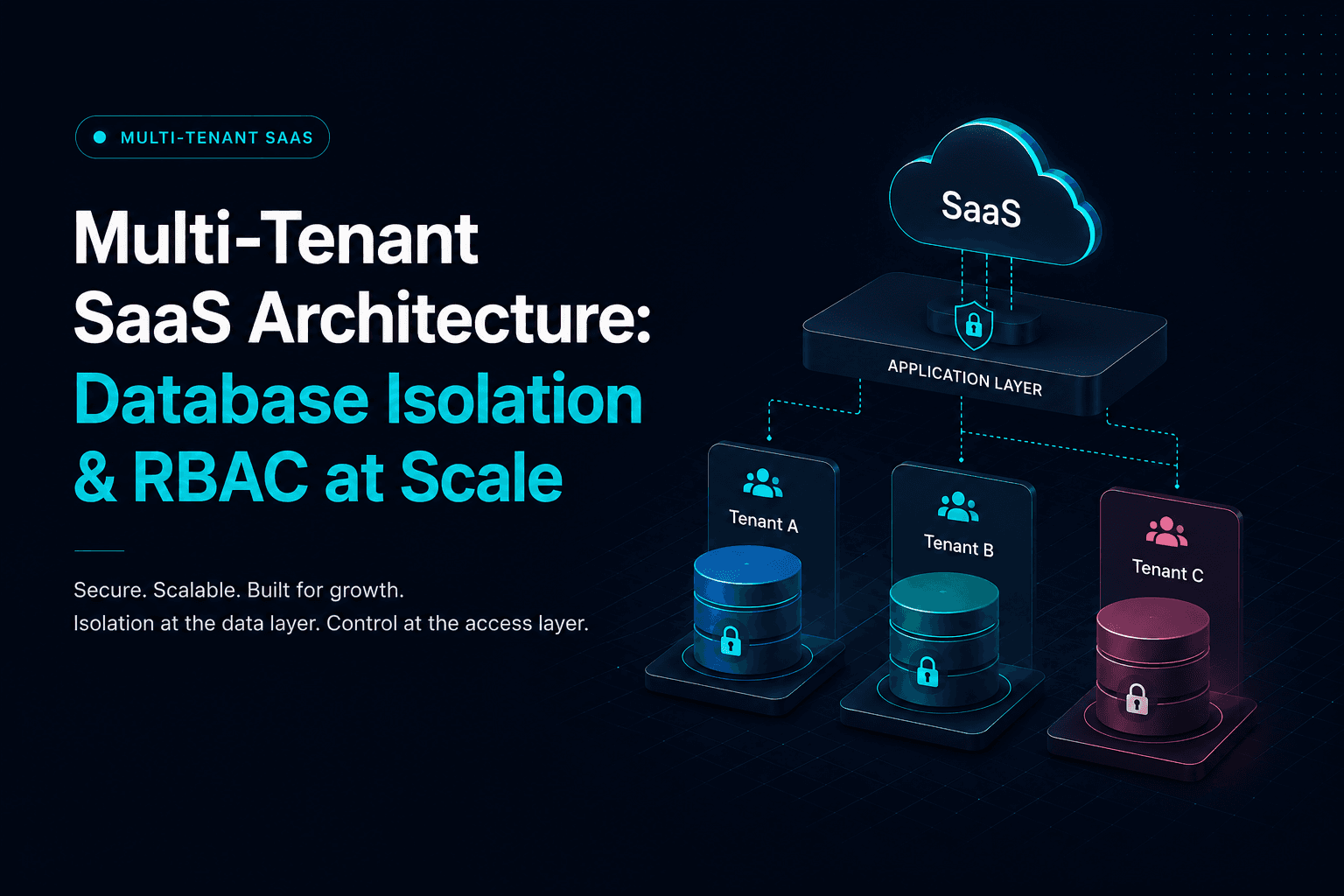
The Multi-Tenancy Imperative
Designing multi-tenant SaaS requires a delicate balance between infrastructure cost efficiency and stringent data isolation. Whether you are building an ERP, CRM, or collaborative workspace, security vulnerabilities that leak data between tenant boundaries are catastrophic.
Zero-Trust Rule: Never rely on application-layer
where: { tenantId }clauses manually written by developers. Enforce tenant isolation at the database proxy or ORM middleware level.
Architectural Models: A Direct Comparison
| Isolation Strategy | Infrastructure Cost | Security Boundary | Maintenance Complexity |
|---|---|---|---|
| Shared DB, Shared Schema (RLS) | Lowest (Optimal) | Logical (Row-Level Security) | Moderate (Prisma / Postgres policies) |
| Shared DB, Separate Schemas | Moderate | Schema Namespace | Higher (Migration overhead) |
| Separate DB per Tenant | Highest | Physical Database File | Complex (Dynamic connection pooling) |
Automatic Tenant Isolation Middleware
Here is the deterministic middleware pattern we deploy across our enterprise Next.js and Prisma SaaS platforms:
// Prisma Client Extension for Deterministic Multi-Tenant Isolation
import { PrismaClient } from "@prisma/client";

export function createTenantPrismaClient(tenantId: string) {
  const prisma = new PrismaClient();

  return prisma.$extends({
    query: {
      $allModels: {
        async $allOperations({ model, operation, args, query }) {
          // Automatic query scoping by active session tenantId
          if ("where" in args && args.where) {
            args.where = { ...args.where, tenantId };
          } else if (operation.startsWith("find") || operation.startsWith("update") || operation.startsWith("delete")) {
            args.where = { tenantId };
          }
          return query(args);
        },
      },
    },
  });
}
Core Tenets of our SaaS Blueprint
- PostgreSQL Row-Level Security (RLS) / Prisma Tenant Scoping: Automatic scoping of every SQL query by
tenantIdprevents human error in API route handlers. - Granular Role-Based Access Control (RBAC): Hierarchical permissions allowing custom role definitions (Owner, Admin, Member, Auditor, Restricted).
- Dedicated Ingress Webhook Buffers: Message queue ingestion (Redis / BullMQ) ensuring third-party webhooks are acknowledged in < 50ms and processed asynchronously.